
Underground · Montana
Horizontal Directional Drilling
Guided bores under roads, rivers, railroads and finished ground — the trenchless way to get pipe and conduit where it needs to go.
What this covers
- Pilot bore, ream and pullback for pipe, conduit and cable
- Crossings under highways, county roads, driveways and parking lots
- Creek and river crossings where trenching is not an option
- Dirt, cobble and rock tooling matched to the ground
- Short residential crossings through long utility bores
- Bore planning, locating support and steering on every shot
What directional drilling is
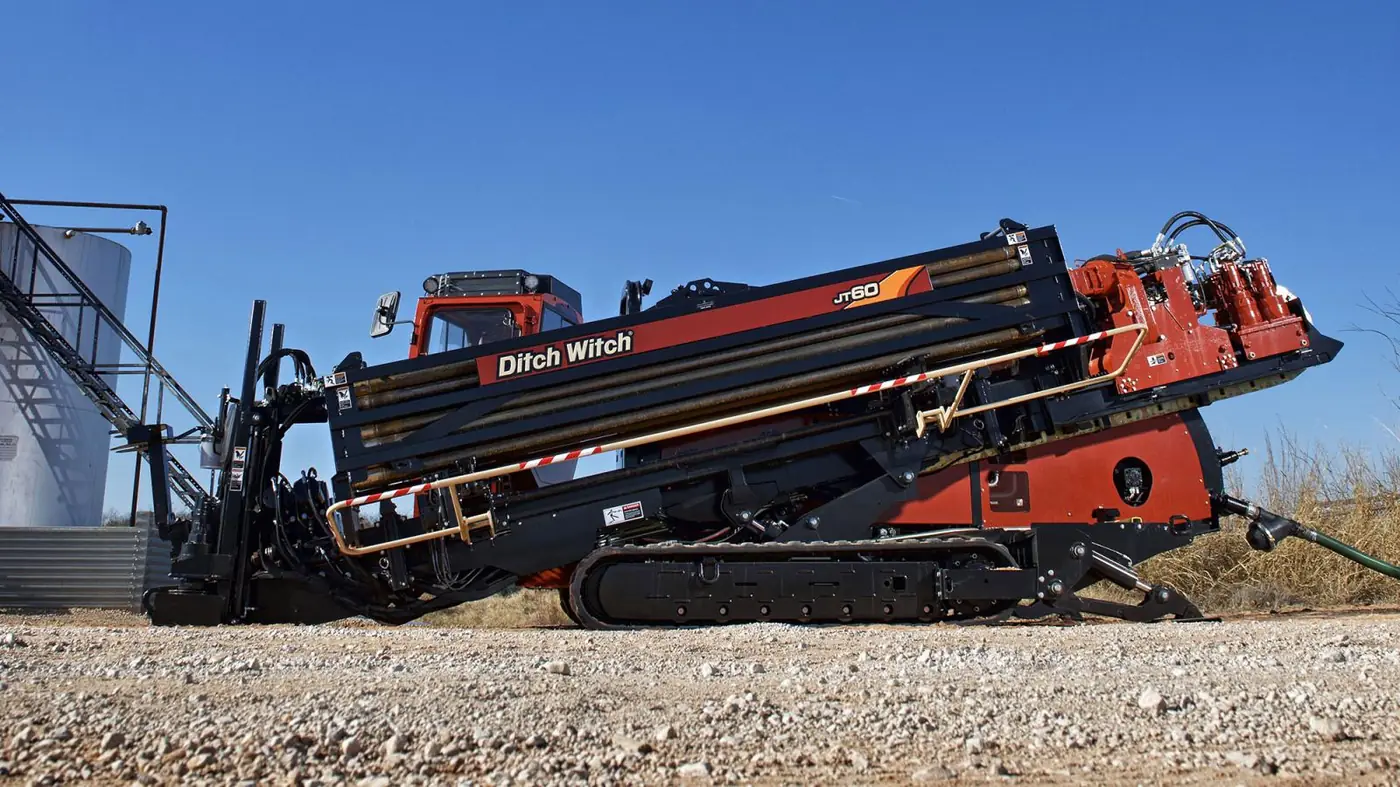
Horizontal directional drilling — HDD, also called directional boring — installs pipe, conduit and cable along a guided underground path without digging an open trench. The rig drills a small pilot hole from an entry point, the hole is enlarged with reamers, and the product is pulled back through. Because the work happens below the surface, the road, driveway, landscaping or waterway above it stays intact.
It is trenchless technology in the plain sense: the utility goes in, the surface does not come up. That is why HDD is the standard method under highways, railroads, rivers and anywhere restoration would cost more than the bore itself.
The work we run
Four O Six Underground runs directional drilling crews out of Helena for work across Montana and the region. Short residential crossings to longer utility bores — dirt, cobble and rock, under roads, creeks and rivers. Most of our shots carry fiber conduit, power, water or sewer pipe for utilities, municipalities, other contractors and property owners.
Founder Beau Straub has been in underground utilities since 2003 and started Four O Six Underground in Helena in 2013. The company’s published record includes more than 1,000,000 feet of drilling completed and 700,000+ hours without a lost-time accident (from our 2017–2019 records, as published on this site).
How a bore runs
1. Plan and locate. Every job starts with Montana 811 locates, a look at the ground, and a bore plan — path, depth, entry and exit points, and the crossings in between.
2. Pilot bore. The drill head is steered along the planned path while the locator tracks it from the surface.
3. Ream. The hole is opened up to size with reamers matched to the ground and the product going in.
4. Pullback. Pipe or conduit is pulled through the reamed hole, fused or joined, and left ready for the next crew.
5. Restore. Entry and exit pits are backfilled and the site is left clean — our customers say it plainly in the testimonial below.
When HDD is the right call — and when it is not
HDD earns its keep when the surface cannot be torn up, when a crossing is involved, or when restoration would cost more than drilling. Open trenching is still cheaper per foot in open, easy ground — and we will tell you so, because we run trenchers and plows too. The honest method for the ground in front of us is the one we will recommend. For budgeting ranges, see our directional drilling cost per foot guide.
“The crews not only provide accurate bores, but also take responsibility for their actions and clean up after themselves without being asked when leaving a jobsite. Four O Six is also proactive in locating utility crossings… Montana owned and operated, this company has a family touch to it and it shows in their desire to do a good job at a minimal cost.”
— Rob Hanson, PE, Contractor for NorthWestern EnergyQuestions
How much does directional drilling cost per foot?
Most small-to-mid-size bores in dirt run $14–$35 per linear foot, larger commercial and municipal work $30–$60 per foot, and solid rock $70–$180+ per foot. Ground conditions move the price more than any other factor. Our cost per foot guide breaks it down.
Can you drill under a river or creek?
Yes. Waterway crossings are core HDD work — the bore passes below the bed, so nothing is dug in the water. Permits and setbacks apply, and we plan the crossing profile around them.
How deep can a bore go?
Depth is set by the crossing and the cover required over the product — most utility bores run 3 to 15 feet deep, and deeper profiles are planned where roads, railroads or waterways demand more cover.
Do you work outside Helena?
Yes. Field crews cover Montana and the region, with past work in Wyoming, Idaho, the Dakotas, Colorado and New Mexico. Consulting is available worldwide; field work is Montana-first.
What do you need from me to quote a bore?
The start and end points, what is going in the ground (type and size), and roughly when. Drawings or a marked-up map help. Call (406) 521-0015 and we will scope it together.
Related
Often paired with
Have a project that needs to go underground?
Call Beau, or send the details. Field crews run out of Helena, across Montana.